RESIDENTIAL DOORS · CLEVELAND’S WEST SIDE & NEARBY SUBURBS
Garage door repair in Cleveland
Need garage door repair in Cleveland? Request an inspection for a stuck, crooked or noisy door. CLE checks the cause, explains the repair options and confirms the price before you approve the work.
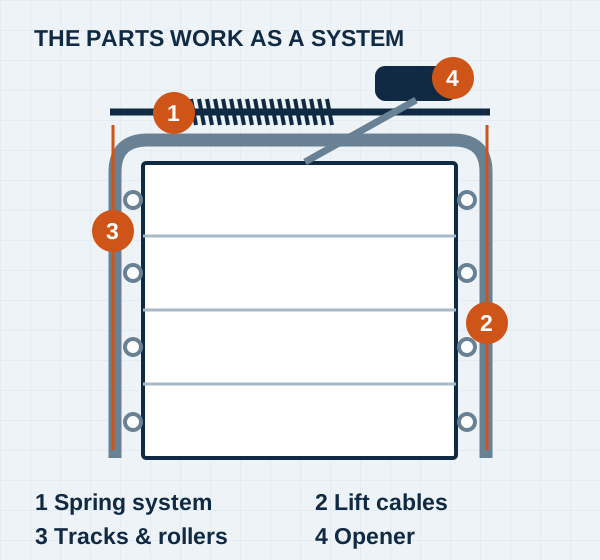
One door. Several connected systems.Illustration for identifying parts, not adjusting them. Layouts vary; describe only what you can see safely.
BEFORE ANOTHER ATTEMPT
Crooked door, loose cable or visible spring break?
Stop operating the door and keep people clear. Do not force it, adjust hardware or pull a raised door’s emergency release. Tell us whether the door is open, closed or trapping a vehicle.
Send your ZIP code and a short description. We’ll contact you to confirm coverage and availability, arrange the inspection and explain the work and price before you decide.
Choose the closest symptom for a useful next step. This is guidance for describing the problem, not a diagnosis.
Door won’t open
Describe what happened before it stopped.
Did you hear a bang? Is there a visible spring gap, loose cable, or one side sitting higher? Tell us what you have already noticed; do not run the opener again to recreate the problem.
When to stop: A spring, cable, track or opener problem can stop the door. Do not force it, lift a heavy door, or pull the release to investigate.
Door won’t close
From a safe standing position, look for storage, snow or another obstruction in the opening or sensor path. Note whether the door reverses, stops partway, or does not respond at all.
When to stop: Do not bypass sensors, increase closing force, or stand under the door. A crooked door, loose cable or damaged track needs inspection before another attempt.
Crooked or off track
Tell us whether one side is higher, a roller is outside the track, or a cable appears loose. A photo from the ground can help if you can take it without approaching unstable parts.
When to stop: Stop operating the door. Do not push rollers back, loosen brackets, move tracks or try to straighten the door. The visible damage may involve other connected parts.
Loud or shaking
Describe sounds you have already heard: scraping near the floor, grinding during travel, or a bang followed by a stopped door. Mention whether the sound seems to come from the door or the opener.
When to stop: Do not repeat cycles to find the noise. Stop if movement is uneven, the door looks damaged, or it suddenly feels heavier. Noise alone does not identify the failed part.
Opener not responding
If the door looks intact, check whether the opener has power and whether only one remote has stopped working. Note any flashing-light pattern and the brand/model if you can read it safely.
When to stop: A running motor does not mean the door can move safely. Stop for straining, unusual heaviness, a spring gap or loose cable; a new opener may not fix the underlying door problem.
The symptom starts the inspection. It does not decide the repair.
An opener can strain because the door is poorly balanced. A loose cable can accompany a spring or track problem. Replacing the first visible part without checking the rest can leave the original cause unresolved.
Our residential repair work covers springs, lift cables, tracks, rollers, hinges, safety sensors and opener operation, as well as maintenance and tune-ups. We inspect the parts relevant to the concern, explain their condition and discuss the work before you approve it.
Compare the complete work, not just a starting price.
Repair cost depends on the failed part, the door’s size and weight, and the condition of related hardware. We confirm the work and total before you decide.
Other repairs need their own quote. Ask what is included, what is separate, and which written parts and labor terms apply. A price for one type of work is not an estimate for every stuck door.
BEFORE THE VISIT
A few details help us prepare.
Tell us your ZIP code, when the problem began and whether the door is open or closed. Mention a trapped vehicle or another access concern when you get in touch.
Describe what changed. A bang, new grinding sound, flashing light or crooked position is useful information.
Share a photo only if safe. Stay on the ground. Do not move the door, reach above it or adjust anything for a better picture.
Keep the work area clear. Keep children and pets away. Do not move a trapped vehicle or pass beneath an unstable door to make space.
Review the findings. We explain the repair options; you approve the work before it begins. After repair, we operate and check the door.
REPAIR QUESTIONS
Useful answers before you contact us.
Tell us what you observe. You do not need a diagnosis to request service.
Can I open the door manually if the opener fails?+
Do not disconnect or lift a door that is crooked, unusually heavy, visibly damaged, or may have a broken spring or cable. Never pull the release on a raised or unstable door. For an intact door, follow the exact manufacturer’s manual; if you are unsure, leave it in place and ask for help.
Can you repair a cable or off-track door?+
Cable, track, roller and related hardware concerns are part of our residential repair service. We inspect the system to determine why the door shifted and which work is required. Do not try to put it back on track yourself.
Can you fix my garage door if I don’t know what’s wrong?+
Yes. CLE helps homeowners across Greater Cleveland fix garage door problems involving springs, cables, tracks, rollers, sensors and openers. Tell us what the door is doing, your ZIP code and whether it is open or closed. We confirm coverage and availability, inspect the cause and explain the work and price before you approve a repair. Sending a request does not itself confirm an appointment.
Should I lubricate a noisy door first?+
Use the maintenance instructions for your exact door and opener rather than spraying every part. A new noise accompanied by uneven movement or visible damage needs inspection. Our visual maintenance checklist explains observations and when to stop.
Safety reference: DASMA’s residential door and opener guidance explains why damaged springs and tensioned hardware require a trained technician. Follow the instructions for your exact equipment.